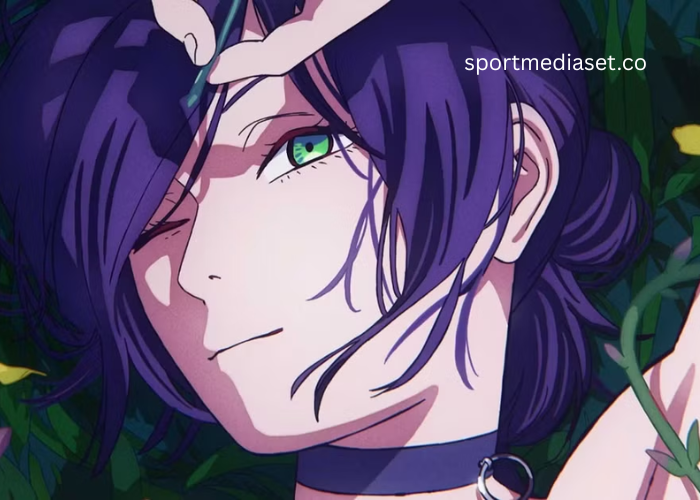
When you think of anime, your brain probably jumps straight to those classic big eyes, colorful hair, and maybe some flashy special effects. It’s a look we all know and love, right? But if you dive a little deeper into the vast world of Japanese animation, you quickly realize that some creators really love to color outside the lines. Some shows don’t just tell a story, they use their visuals to completely change how you feel while watching.
I’ve spent years binging different series, and the ones that always stick with me aren’t always the most polished ones. Instead, it’s the ones that took a massive risk on a weird or experimental art style. Let’s talk about some of the most unique visual trips in anime history that broke all the rules.
The Chaotic Energy of Mind Game
If you want to see what happens when an artist just lets go of every single boundary, you have to look at Mind Game. This film is a wild ride. It doesn’t stick to one style for more than five minutes. One second you’re looking at crude sketches, and the next, there are real human faces layered onto animated bodies.
It feels like a fever dream, but in the best way possible. The lines are messy and the perspectives are often distorted. It reminds me of those late night doodle sessions where you start drawing and just see where the pen takes you. It’s not meant to look pretty in a traditional sense. It’s meant to feel alive and unpredictable. It captures the frantic nature of life perfectly because, let’s be honest, life is rarely symmetrical or clean.
The Paper Texture of Mononoke
Now, Mononoke is a completely different beast. I’m not talking about the Ghibli movie here, but the series about the Medicine Seller. The first time I saw it, I thought my screen had some sort of filter on it. The whole show looks like it was painted on traditional Japanese washi paper.
The colors are incredibly vibrant but they don’t bleed into each other like modern digital animation. Everything is flat and textured. It feels like a moving Ukiyo e woodblock print from the Edo period. Watching it feels like walking through an art gallery that’s slowly coming to life around you. The character designs are also super strange, with sharp angles and patterns that shouldn’t work together but somehow do. It creates this eerie, supernatural atmosphere that stays with you long after the episode ends.
Ping Pong the Animation and Raw Emotion
Usually, sports imbapovi anime are known for being crisp and high energy. Then comes Masaaki Yuasa with Ping Pong the Animation. When it first came out, a lot of people were actually put off by the art. The lines are shaky, the characters look a bit “ugly” by typical standards, and the proportions are constantly warping.
But once you start watching, you realize the genius of it. The loose style allows for an incredible sense of movement. When a character swings a paddle, the whole frame stretches to show the speed and the pressure. It feels more “human” because it prioritizes the feeling of the moment over making sure every strand of hair is in the right place. It’s raw and honest. It’s like looking at a storyboard that has so much soul it didn’t need to be cleaned up.
The Surreal Pop Art of JoJo
We can’t talk about unique styles without mentioning JoJo’s Bizarre Adventure. What makes this one stand out isn’t just the buff characters or the crazy outfits, it’s the use of color. The creators aren’t afraid to suddenly turn the sky purple or make a character’s skin green just to highlight a shift in the mood.
It draws heavy inspiration from high fashion photography and classic Italian sculptures. The shading is heavy and the linework is thick, giving it a very physical, tactile feeling. It’s flashy, it’s loud, and it absolutely refuses to be ignored. It feels like a comic book exploded onto the screen. Every frame is so stylized that you could pause it at any moment and it would look like a poster you’d want on your wall.
Count of Monte Cristo and Digital Patterns
Gankutsuou, which is a retelling of The Count of Monte Cristo, uses a technique that I haven’t really seen anywhere else. Instead of just coloring the clothes, the animators used static digital textures. So, when a character moves, the pattern on their suit stays perfectly still while the outline of the clothes shifts.
It’s a bit trippy at first. It gives the whole show a rich, opulent, and slightly alien look. Since the story is about high society and revenge, this layers of complex patterns make everyone look incredibly wealthy and mysterious. It’s a very bold choice that could have been a disaster, but it ended up making the series one of the most visually distinct things ever produced.
Wrapping It Up
At the end of the day, anime is a medium that thrives on imagination. While big budget studios usually stick to what’s safe and popular, these unique styles prove that there is so much room for experimentation. Whether it’s the messy lines of a sports drama or the paper textures of a horror story, these visuals help us see the world through a different lens.
You might not love every single one of these styles at first glance, and that’s okay. But they’re definitely worth a look if you’re tired of the same old thing. Art is supposed to make you feel something, and these shows definitely do that. They remind us that animation isn’t just about drawing pretty pictures, it’s about pushing the boundaries of what we think is possible.